


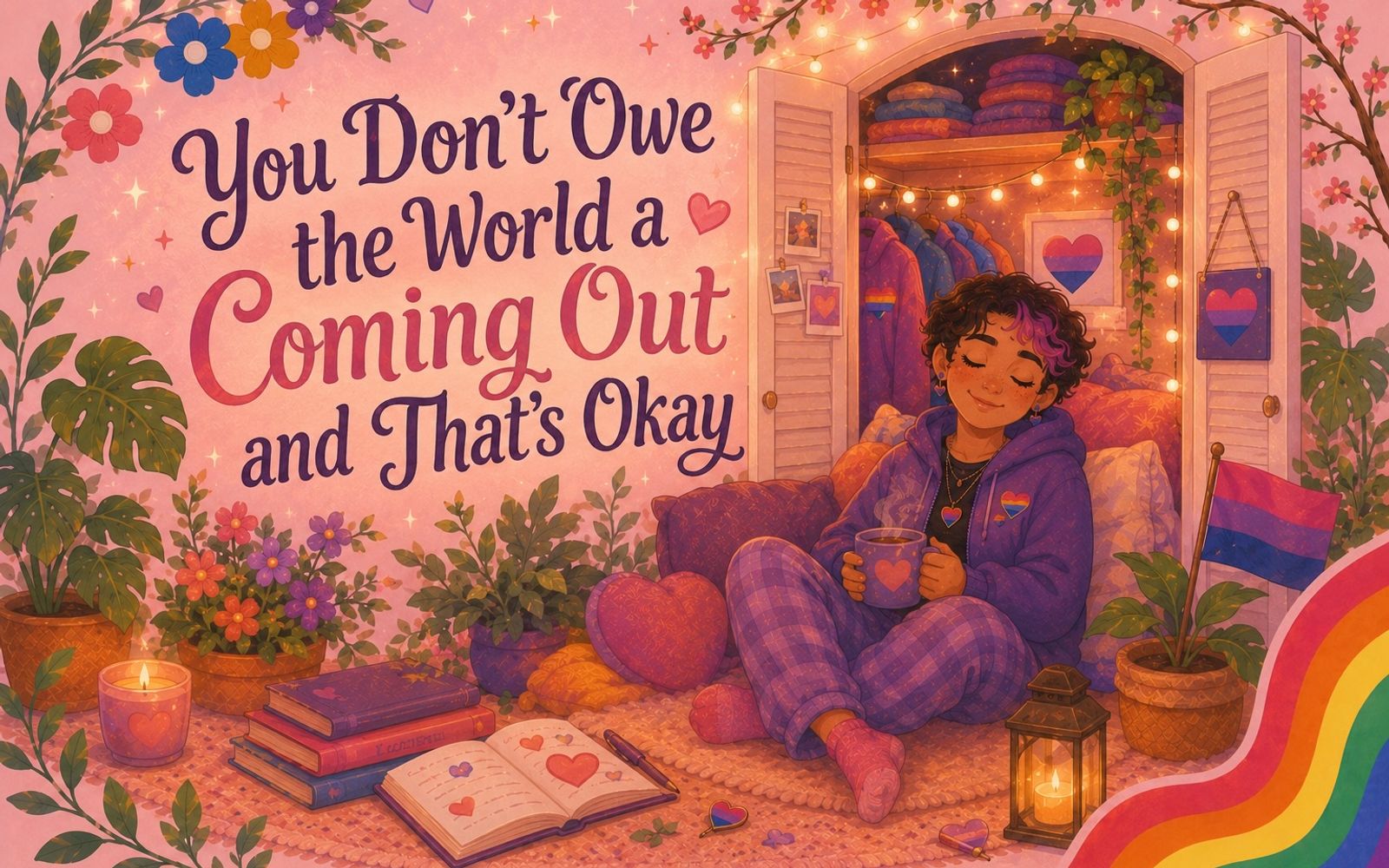
Queer people are often told that coming out is the ultimate goal, like we’re stuck in some kind of waiting room until we announce ourselves to the world. But let’s take a step back and ask: Why do we even have to “come out” when straight people never have to? Why does queerness require an official announcement, but cis-heteronormativity gets to just exist? The truth is, you don’t owe anyone a grand reveal, and if you choose to stay in the closet, partially, fully, or just for now, that is completely valid.
The Closet Isn’t a Prison, It’s a Shelter
Let’s reframe the closet. Instead of thinking of it as a dark, suffocating space you need to escape, what if it’s a protective cocoon? A place where you get to understand yourself before sharing it with others. A space where you decide when, where, and if you ever open that door. Coming out isn’t a requirement to be valid in your queerness, it’s just one of many paths you might take, when and if it feels right.
Safety matters. If you’re in an environment where coming out could put you at risk, emotionally, physically, or financially, then keeping parts of yourself private is a form of self-care. You are not “lying” or “hiding”, you are protecting yourself, and that is not just okay, it’s smart.
You don’t have to shout it from the rooftops to be valid.
Self-Acceptance Doesn’t Require a Public Coming Out
While you don’t have to come out to everyone, telling someone close to you can be a step toward self-acceptance. That could be a friend, a trusted family member, a therapist, or even just writing it down in a journal. You don’t have to shout it from the rooftops to be valid, you just have to acknowledge it to yourself. Suppressing who you are for others’ comfort is different from keeping it private for your own well-being.
And let’s be real: coming out isn’t a one-time thing. It’s a lifelong process. You might tell one person and feel good about it, then decide you don’t want to share with others for a while and that’s fine. There’s no right way to do this.
You Define Your Own Coming Out Story
Being queer is about embracing who you are, and that journey looks different for everyone. If coming out makes you feel empowered, wonderful! But if staying in the closet or only stepping out for a select few, feels safer and more authentic to you, that’s just as valid. Your identity is yours. You don’t owe anyone an explanation, a label, or a coming-out story.
Coming out isn’t a one-time thing. It’s a lifelong process.
Finding Strength in Your Own Time
Navigating identity is a deeply personal journey. Some people feel liberated by coming out early and boldly, while others take time to understand themselves before they share it with the world. No one way is better than the other. Taking the time to embrace your identity in private is just as powerful as sharing it publicly.
There are many ways to explore and affirm your identity. Maybe you find comfort in queer media, books, or online communities where you can express yourself freely. Maybe you test the waters by changing the way you dress, using different pronouns in a safe space, or writing about your experiences. Each small step counts, and each one is valid.
The Importance of Safe Spaces
Whether you are out or not, surrounding yourself with affirming and supportive people can make a world of difference. This might be an online community, a chosen family, a trusted friend, or a supportive mentor. Finding people who respect your journey, no matter what stage you are in, can help ease the burden of societal expectations.
But let’s be real: sometimes, safe spaces aren’t readily available. If you are in a situation where you feel alone, know that you are still whole and worthy. There are LGBTQ+ helplines, organizations, and virtual spaces that exist to support you. You are never truly alone in your journey.

You are never truly alone in your journey.
Embracing the Fluidity of Identity
Identity isn’t a fixed point, it evolves. What feels right today might shift in the future, and that’s okay. There’s no deadline for understanding yourself, no expiration date on your queerness. You might come out later in life, or never at all, and that doesn’t make your experience any less real.
Many queer people go through phases of questioning, exploring, and redefining themselves. Labels can be helpful for some and limiting for others. You don’t have to commit to any one identity forever; you just have to honor what feels true to you in the moment.
Breaking the Stigma of coming out
There is an unspoken pressure within queer spaces to be “out and proud” at all times. But pride looks different for everyone. It’s just as radical to quietly love yourself as it is to wave a rainbow flag. No one should feel ashamed for keeping parts of themselves private. Choosing not to come out does not mean you are any less proud, valid, or worthy of love.
Let’s dismantle the expectation that being out is the only way to be authentically queer. Let’s celebrate the people who are discovering themselves on their own terms, in their own time. Let’s affirm that safety, comfort, and personal choice matter more than societal pressure.
Choosing not to come out does not mean you are any less proud, valid, or worthy of love.
You Are Enough
Whether you’re out, partially out, or staying in the closet for now, know this: you are enough. You are valid in your existence. You are worthy of love, respect, and joy. Your queerness is not defined by how many people know about it, it exists because you exist.
So take your time. Move at your own pace. Trust yourself. No matter where you are on your journey, you are seen, you are valued, and you are loved. 💖